
Commercial moves across the borough, from Stockport Exchange and the Reddish mills to Bredbury and Cheadle Royal. Planned around your working week so you are trading again quickly.

In short: tell us roughly how many desks and how much storage, the floor and lift at each end, and the window you need. We will arrange a look round and send a fixed written price.
An office move is measured by one thing, which is how quickly everybody can work again afterwards. Furniture arriving undamaged is taken as read. What gets remembered is whether the first morning in the new premises was productive or chaotic.
That shapes how the work is planned. The order equipment comes back on matters more than the order it is loaded, and the things people need first have to be identified before anything is packed. It also means the unglamorous parts of the process, the labelling and knowing which desk belongs to whom, do more real work than the lifting does.
Stockport adds one wrinkle worth naming. The borough has an unusually wide range of commercial buildings, from brand new space at the Exchange to Victorian mills with one lift and a shared reception. The building you are leaving and the building you are going to often have nothing in common, and the move has to work for both.
Six kinds of commercial premises, each of which moves differently.
Modern Grade A office space next to the railway station, with proper loading provision, goods lifts and building management who will have their own requirements. These are among the smoothest commercial moves in the borough, provided the building is engaged early.
Broadstone Mill and Houldsworth Mill hold a large number of small offices and studios. Wonderful buildings, and the practical realities are a shared main reception, one lift serving everybody, and a car park that fills up. Access is the whole job here.
One of the principal industrial estates in Greater Manchester, half a mile from junction 25 of the M60. Level access, roller shutters and room to turn a vehicle. The office is usually a small part of a job that is really about stock and equipment.
Established business parks with modern units, good parking and straightforward loading. The constraint tends to be shared corridors and coordinating with neighbouring tenants rather than the building itself.
Offices above shops and around the Merseyway and Redrock area. Older buildings, tight service access, lifts that were never designed for filing cabinets, and loading that often has to happen on a public street.
Small serviced suites and co-working space along Pepper Road, Newby Road and Stockport Road. Usually straightforward, but the provider will have rules on access hours and lift use that need checking before a date is set.
Most of the work on a commercial move happens weeks before anybody picks anything up. Four decisions carry the bulk of it, and none of them involves vans.

Work out which day and which hours cost you least, then look for availability. Choosing the date first and hoping it suits the business is how moves end up happening on the worst possible afternoon.
A walk round with every cupboard and storeroom opened is worth more than any spreadsheet. It is also the moment to decide what is not coming, which is the cheapest saving available to you.
Decide what has to be working on the first morning, write it down, and make sure everyone involved knows. That single list drives the loading order, the labelling and the sequence at the far end.
Access hours, lift booking, loading bay, insurance requirements, and who authorises out-of-hours entry. In managed buildings this takes weeks, and it is the thing most likely to move your date if it is left late.
Roughly how many desks, how much storage, which floor at each end and the window you need. Nothing is booked until you say yes.
In commercial work the constraint is rarely the furniture. It is the building and the people who run it. These are the six things worth establishing at both addresses before a date is agreed.
In a managed building, ask what they require from a removals contractor. Some want notice, some want specific hours, some want paperwork in advance. All of that is easy in week one and very difficult the day before.
Stockport has a broader mix of commercial premises than most boroughs, and a good share of the work we do here is not desks at all.
Fittings, counters, displays and stock. Stock is nearly always the part that has been underestimated, because it is counted in products rather than in shelves and pallets. Retail moves also tend to have a hard deadline attached, since a closed shop is a shop taking no money.
Benches, tools, materials and usually something heavy that needs a plan of its own. Around Bredbury this is the majority of what we see. The office part is often a portacabin or a mezzanine, and it is the smallest element of the job.
Frequently moved separately from the main premises, sometimes months apart. Racking, pallets and boxes that need to arrive in a findable order rather than simply arriving.
The mill conversions at Reddish are full of one and two-person businesses. Small volumes, but a shared lift and a shared entrance mean the building sets the pace rather than the contents.
The cost of a commercial move is rarely dominated by the invoice. It is dominated by the hours nobody is working, and those hours are decided by choices made weeks earlier.
A useful exercise before you plan anything is to work out roughly what an hour of closed trading or idle staff costs the business. Once that number exists, decisions that felt like extravagances start to look like sense. Paying for an evening move rather than a Friday afternoon one, or splitting a job across two shorter visits so the phones are never off, are easy to justify against a real figure and impossible to justify against a vague sense of expense.
The second thing worth doing is deciding what counts as being open. Very few businesses need everything working to function. Most need a phone answered, an email seen and one or two people able to do the core job. If that minimum can be running by lunchtime on day one, the rest of the setup can take a week without anyone outside the business noticing.
Sequencing is what delivers that. Whatever supports the minimum goes on the first vehicle and gets set up first, before anything else comes off. It is a small change in loading order and it routinely moves the point of being operational forward by half a day.
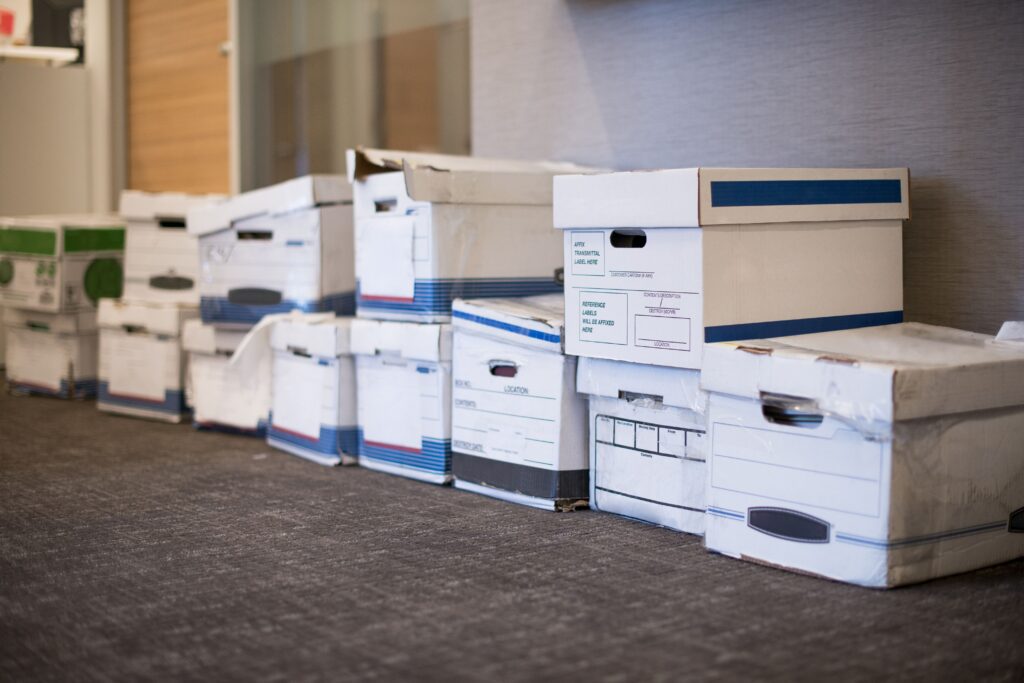
This is the part of a commercial move that gets left to the week before, and it causes more disruption afterwards than anything that happens on the day itself.
Start with anything that physically arrives. Suppliers, couriers, waste collection, water and coffee deliveries, and whoever services the equipment. A change of address on an account is not the same as a change of delivery address, and the two are frequently held in different systems by the same supplier. Deliveries turning up at premises you no longer occupy is the single most common post-move problem we hear about.
Then the things customers use to find you. Your website, your Google listing, the address in your email signature, invoices, headed paper and any directory that lists you. A stale Google listing sends people to an empty building, and it is the one that takes longest to correct once it is wrong.
Finally the contractual pieces. Insurers usually need to know before the move rather than after it, particularly where equipment or stock is involved. Business rates, the bank, and anyone holding a direct debit tied to the premises all need the date rather than a vague notice.
Write the list at the point you sign the new lease, not at the point you pack. It is a twenty minute job in month one and a fortnight of firefighting in month three.
Five variables, and the two that matter most are the ones businesses tend to fix last.
Not how many staff, and not how many rooms. How many desks, how many cabinets, and how many shelves, racks or pallets. That is the count that maps onto vehicles and hours.
Lifts, loading, floor levels and carry distance at both ends. In Stockport the gap between a Bredbury unit and a Merseyway upper floor is wider than the gap between most towns.
Weekend and out-of-hours work is normal and it is priced differently. Deciding this early is cheaper than deciding it late, because late decisions limit which crews are available.
Anything hard wired, plumbed in or under a maintenance contract needs the right person and the right order. Coordinating that is straightforward with notice and expensive without it.
Staff packing their own desks into crates the afternoon before genuinely reduces the bill. It only works if somebody owns it and the crates arrive in time.
Across the SK postcodes, including Stockport town centre and the Exchange, Reddish, Bredbury, Cheadle and Cheadle Royal, Stanley Green, Hazel Grove, Bramhall, Marple and Romiley. Our business removals page covers the wider Greater Manchester area.
Commercial moves across Greater Manchester, from a single office to a whole premises.
Our main Stockport page, covering domestic moves across the borough.
For a fit-out that overruns, or equipment with nowhere to go yet.
Desks, storage and workstations taken apart and rebuilt.
It is driven by the number of desks and storage units, the access at both buildings, and the hours you need us to work. A ground floor unit at Bredbury on a Tuesday and a third floor suite at Merseyway on a Sunday are different prices for the same amount of furniture. Give us a rough count and both addresses and we will arrange a look round before quoting.
Less than most businesses assume, if the sequencing is planned. Many of the moves we do here are loaded on an evening and set up the following morning, with the core of the business working before lunch. It depends far more on the decisions you make about priority than on the size of the job.
Often yes, by moving in phases. A department at a time, or storage and archive first with the working areas last. It takes longer overall and it keeps you trading throughout, which for a lot of businesses is the cheaper trade.
You do, and it needs starting early. Both buildings will have their own requirements about access hours, lift use and paperwork, and only the tenant can authorise those. Tell us what they say and we will work inside it.
No. Stock, racking and pallets are a normal part of commercial work for us, particularly around Bredbury. What helps is knowing roughly how many shelves or pallets rather than how many products, and whether anything is heavy for its size.
Tell us at the quote stage and where you would like it to go. Used office furniture has a resale market, reuse organisations take a good deal of it within limits, and some can go to storage while the decision is made. What does not work is deciding on the morning.
Yes, and we do a lot of both here. Retail units and workshops have their own rhythm, usually a hard deadline and something heavy, and they are priced on fittings and stock rather than on desks.
Four to six weeks for a straightforward office, longer if either building is managed or you need a specific weekend. In practice the building approvals set the timetable more often than our diary does.
Send both addresses, a rough count of desks and storage, and the window you need to move in. We will arrange a look round and come back with a fixed written price.