
Period villas in Bowdon, large detached houses in Hale, semis in Timperley and flats above the market. Four quite different moves inside three postcodes.
The short version. Give us the two addresses, a sense of the property and any part you already know is awkward. A written figure follows, normally within the working day, and it holds.
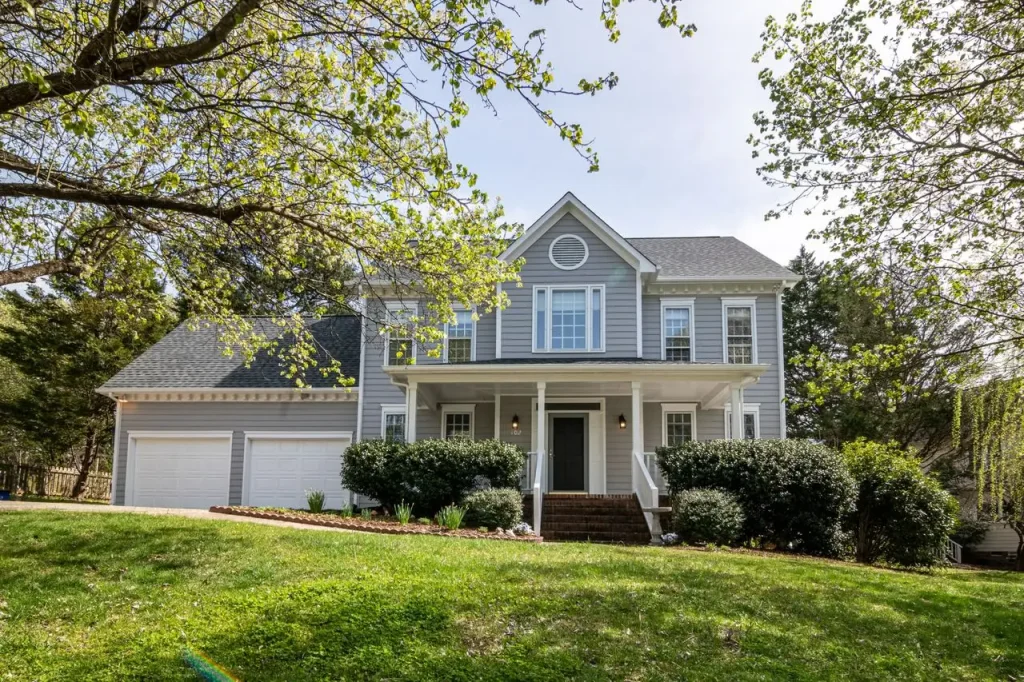
Altrincham packs an unusual range of housing into a small area. Within a couple of miles you go from Victorian villas on the Devisdale to modern detached houses in Hale Barns, semis in Timperley and terraces in Broadheath. Almost nothing that applies to one applies to the next.
The practical effect is that bedroom count is close to useless here as a guide to a move. A four-bedroom villa in Bowdon with a cellar, a boarded loft and a garden room can be twice the job of a four-bedroom house in Timperley, and the difference has nothing to do with the number on the listing.
So we ask about the property rather than the postcode, and for the larger houses we would rather come and see it. It is twenty minutes, it costs nothing, and it is the difference between an estimate that moves and a price that does not.
Six parts of the area, and they behave very differently on the day.
Substantial Victorian and Edwardian villas, much of it within a conservation area. Wide rooms, high ceilings and original staircases that are narrower than the rest of the house implies. Frequently a cellar as well. These hold considerably more than the frontage suggests.
Large detached houses, mature gardens and a good number of gated or gravel drives. Access is generally comfortable once the gate is open, and the volume is the thing that catches people out.
Inter-war and post-war semis with driveways, straightforward stairs and manageable lofts. The most predictable moves in the area, and usually the quickest.
Terraced housing and smaller semis close to the industrial area. Street parking rather than driveways, so the carry from the vehicle is part of the day.
Apartments, converted buildings and flats above the shops around Stamford New Road and Ashley Road. Controlled parking, a busy market and the Metrolink all in the same few streets.
Semi-rural, with lanes, long approaches and properties set well back from the road. Almost always fine, and worth a look before we put a figure on it.
Access matters more than volume in most of this area, and it takes a particular form. Rather than tight terraced streets, the constraints here are usually the approach to a house and the inside of an older one.
All of it is manageable when it is known beforehand. Very little of it is manageable at eight in the morning.
Where you are, where you are going, roughly what the house is and when you want to do it. That is enough for us to work with.
None of these take long. Between them they remove most of what goes wrong on a moving day in this part of the world.
Widest wall in each room, every doorway, and the turn on the staircase. People part with furniture that would have fitted and move furniture that will not go through the door, and both are avoidable with a tape measure.
These are the spaces that change a quote. Work out what is coming, get it accessible, and deal with the rest while there is still time to sell or donate it.
A piano, an aquarium, anything hard wired. Their availability is usually tighter than ours and the sequence has to work around them.
It is the slowest room in any house and the one still being emptied when the crew arrives. Finish everything else first and give the kitchen the final evening.
A large share of the properties here were built between about 1860 and 1910, and moving out of one has a rhythm of its own that catches people out even when they have moved several times before.
The first thing is that these houses hold more than modern ones of the same nominal size. Ceilings are high, so wardrobes and bookcases are tall. Rooms are wide, so furniture is large. There is usually a cellar, often a boarded loft, and frequently a garden room or an outbuilding that has been quietly absorbing things for years. A four-bedroom villa can genuinely contain as much as a five-bedroom new build.
The second is that the staircase rarely matches the house. Grand hallway, generous landing, and a flight between them that turns and narrows at exactly the point a wardrobe needs to go round. That is why dismantling is standard here rather than exceptional, and it is why we would rather see the stairs than have them described.
The third is the doorways. Original door frames are frequently narrower than modern ones and the architrave takes another inch off each side. Taking a door off its hinges solves a surprising number of problems and takes two minutes, and we would far rather do that than force something through.
Where a property is listed or in a conservation area, none of that changes what we do inside. It occasionally changes what can happen outside, in terms of where a vehicle stands, so mention it when you get in touch.
Everything in the property, including the parts people assume need arranging separately.
Beds, wardrobes and flat-pack taken apart and rebuilt. In the Bowdon and Hale period houses this is routine rather than exceptional, because the staircases decide it.
Disconnected and reconnected at both ends, integrated units included where they are coming with you.
All of it, provided we know at the quote stage. The cellar is the one most often forgotten here and the heaviest when it is found.
Garden furniture, pots, machinery, greenhouses and anything in a shed. On the larger Hale and Dunham properties this is a substantial job on its own.
Uprights, grands, safes and gym equipment, with the right crew and enough notice to plan it properly.
For a gap between dates, a phased move, or a downsize where the decisions are not made yet.
Five things. In this area the first two do most of the work.
Counted in rooms and storage spaces. The period houses here routinely hold half again what people estimate, because a cellar and a boarded loft are effectively two extra floors nobody counts.
Gate, gravel, trees and the distance from a sensible parking spot to the door. Two identical houses can price differently on this alone.
Original staircases in the older properties mean more dismantling than in a modern house, and every piece taken apart is time spent at both ends.
Some of the larger Bowdon and Hale houses run better across two days. It is calmer, it reduces the risk of damage, and it often costs less than a very long single day.
Fridays, month ends and the school holidays fill first. A midweek date outside those weeks is cheaper and the day itself is far less pressured.
A fair number of the households we move here have collected things worth a bit more than the average, and it is worth being plain about how that is handled rather than leaving it vague.
Pictures, mirrors and anything framed travel upright and separately, never flat under something else. If a piece is large or the frame is fragile, tell us in advance so the right materials are on the vehicle rather than improvised on the day.
China, glass and ceramics want proper packing rather than newspaper and hope. This is the category where doing it yourself most often goes wrong, because the failure is invisible until you unwrap it. If you are packing the rest of the house yourself, it is worth having us do the glassware and the display cabinets.
Wine racks and cellars are a genuine consideration in this area. Bottles are heavy in quantity, they do not like being stood upright after years on their side, and a full rack should be emptied and packed rather than moved loaded. Tell us if there is a cellar with wine in it and we will bring the right boxes.
Anything you would struggle to replace, or that has a value you would have to prove, should travel with you rather than on a vehicle. Jewellery, watches, documents, small antiques. Not because a removal is risky, but because the simplest way to be certain about something is to keep it in your own car.
Altrincham sits ten minutes from Manchester Airport, and that shows up in the kind of moves we do here more than you might expect.
A steady proportion are people leaving for a few years rather than for good. A posting abroad, a contract somewhere else, a family following work. Those moves rarely involve emptying a house into another house. More often part of it goes into storage, part goes with them, and part stays with relatives, which needs deciding before anybody starts packing rather than during.
The mirror image is people arriving, often into rented accommodation first while they look for something to buy. That means two moves within a year, and it is worth planning as a pair rather than as two unrelated bookings. Anything that will not fit in the interim property can go straight into storage rather than being moved twice, which is cheaper and considerably less wearing.
If either of those is you, say so at the first conversation. It changes how we label and load rather than how much we charge, and getting it right at the start saves unpicking it later.
WA14 and WA15 in full, plus the villages on the Cheshire side.
Commercial work across Broadheath and the town centre, if you are moving a business rather than a home.
Uprights and grands, which turn up in the Bowdon and Hale houses more often than anywhere else we work.
Everything, or just the china and the glassware you would rather somebody else wrapped.
Space to put things while a purchase completes or a decision gets made.
On what is actually there and how easily we can reach it, both of which are specific to your address. A Timperley semi with a driveway and a Bowdon villa with a cellar and a gravel drive are different jobs even at the same bedroom count. Send us both addresses and a description and you will have a figure in writing, usually within the working day.
For the larger period properties, yes, and we would recommend it. Twenty minutes on site turns an estimate into a fixed price. For a flat or a smaller semi with simple access, a good description and a few photographs are normally enough.
Not usually, though it is worth telling us. Gravel behaves differently after heavy rain, gates need to stay open rather than close behind a vehicle, and it helps to know whether there is space to turn inside them or whether we reverse out.
More comes apart than in a modern house, which is normal here and part of the job rather than an extra. Beds and wardrobes almost always need it, and everything is rebuilt at the other end.
Yes, and the rest of the WA14 and WA15 postcodes, including Bowdon, Broadheath, Oldfield Brow, Well Green, Ashley and the villages towards Rostherne.
No, and for some of the larger houses here it is the better answer. We will say so at the quote stage rather than discovering it at four in the afternoon with a third of the house still in it.
Yes. Storage is the ordinary answer when completion moves, when a downsize is not fully decided, or when a purchase and a sale refuse to line up. Raise it early and it goes into the price properly.
Four to six weeks for most moves, and longer for a large house or a date in July or August. For anything needing a site visit, earlier again, simply because the visit has to happen before the quote can.
Send the details over and we will come back with a price in writing. If the house warrants a visit, we will say so and arrange one.