
Office Removals in Altrincham
From the trade units on Atlantic Street to consulting rooms above the shops on Ashley Road. Two very different kinds of commercial move, both handled properly.
- Weekend and evening work
- We look before we price
- Client-facing businesses a speciality
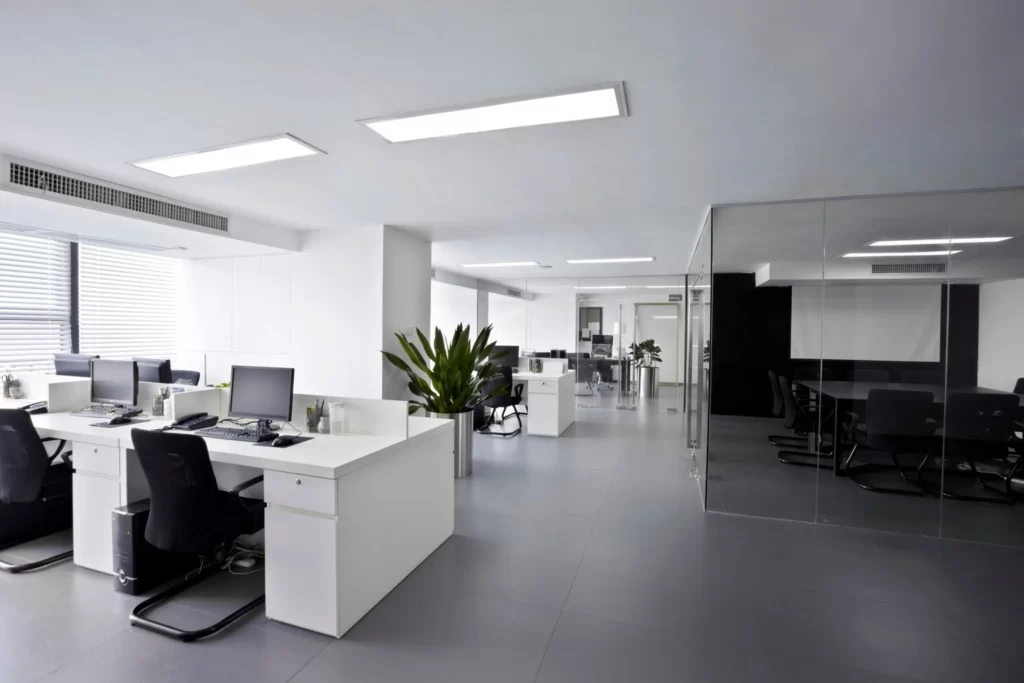
Two kinds of business, two kinds of move
The short version. Tell us the counts, the two addresses and whether you can afford to close. We will look at the premises, then price it in writing.
Commercial work in this area splits cleanly in two, and the two halves need almost nothing in common from us.
On one side there is Broadheath, which is industrial in the proper sense. Trade counters, workshops, warehousing and stock, with yards to reverse into and shutters to load through. Those jobs are about volume and equipment, and the planning is mostly about sequence and weight.
On the other side there are the professional businesses. Solicitors, accountants, clinics, salons, consultancies and studios, mostly in the town centre or along Ashley Road, mostly above something else, and almost all of them client-facing. Those jobs are small in volume and tight in constraint, because the limiting factor is not the furniture. It is that somebody has appointments on Monday.
We would rather know which of the two you are in the first sentence, because everything after that follows from it.
Where businesses are around Altrincham
Six kinds of premises, and the gap between the easiest and the most constrained is unusually wide here.
Broadheath and Atlantic Street
The industrial heart of the area. Trade counters, warehousing, workshops and light manufacturing, with yards, roller shutters and room to turn a vehicle. Physically the easiest commercial work here and usually the largest by volume.
Town centre offices
Professional practices above the shops on Stamford New Road, Ashley Road and around the market. Older buildings, stairs more often than lifts, and parking restrictions that decide the start time.
Serviced and shared offices
A growing amount of flexible space in and around the centre. Small volumes, and the operator sets the rules on lift use, access hours and how much notice they want.
Hale and Ashley Road
Small consultancies, clinics, salons and studios, frequently in converted buildings or above retail. Client-facing, so the constraint is usually the appointment book rather than the building.
Timperley and Well Green
Small units and offices serving the residential areas. Straightforward access in the main, with street parking as the usual limitation.
Davenport Green and the airport fringe
Larger modern offices close to the M56 and the airport. Purpose-built, with proper loading and parking, and building management who will have their own requirements.
What shapes the job
Four things determine how a commercial move here is planned, and only one of them is how much there is.

Three counts and we can size the job closely. Headcount is misleading, because a six-person consultancy and a six-person practice with twenty years of files are not comparable.
The single widest variable in this area. A unit on Atlantic Street and a second floor office above a shop on Ashley Road are different jobs at identical volume.
Practices with an appointment book move differently from businesses that can close for a day. It changes the hours rather than the price, and it needs saying at the outset.
Serviced offices and managed buildings set their own conditions on hours, lifts and notice. That timetable is usually tighter than ours.
Tell us the shape of it
Desks, cabinets, where you are and where you are going. If you have an appointment book to work around, mention that too.
Trade units, workshops and stock
Broadheath is the part of this area people forget when they picture Altrincham, and it is where a good deal of our commercial work actually happens. Atlantic Street and the roads around it hold trade counters, workshops, light manufacturing and a lot of storage, and moving one is a different discipline from moving an office.
The measurement is the first difference. Nobody counts desks in a trade unit. What we need is bays of racking, pallet spaces, benches and a rough sense of what is heavy for its size. A business that tells us it holds twelve thousand parts has said nothing useful. Thirty bays and four pallets tells us almost everything.
The second is that racking sets the timetable. Stock cannot go back until shelving is up, shelving cannot go up until the floor is clear, and trying to overlap those stages produces a unit with pallets stranded in the middle of it. On any job of size that means the racking moves ahead of the stock, ideally on a separate day.
The third is weight. Anything metal, tinned or liquid is far denser than its volume suggests, and a unit that looks half empty can be a bigger job than a full office. Tell us what the stock actually is rather than how much space it occupies.
Finally, trade premises usually have a customer-facing counter as well as a back. Those two halves have different priorities on the day, and it is worth deciding early which one has to be working first.
Moving a client-facing practice
If people come to you by appointment, your move is governed by the diary rather than by the lease. A solicitor, a dentist, an accountant or a salon cannot simply close for three days and catch up afterwards, because the appointments do not stack.
The pattern that works best here is a Friday evening start with a Saturday to set up, opening as normal on the Monday. It costs a little more in out-of-hours work and it saves a week of lost appointments, which for most practices is not a close call.
Two things make that possible. The new premises has to be genuinely ready, meaning decorated, cleaned and with the connections live, because a weekend leaves no room to discover a problem. And the reception area has to be the first thing set up rather than the last, since it is the only part clients will see on Monday morning and the part that most affects whether the practice looks in control.
The other consideration is telling people. Clients with appointments in the fortnight after a move need to know the address has changed, and a note at the point of booking works far better than an email nobody opens. The businesses that struggle after a move are rarely the ones whose furniture arrived late. They are the ones whose clients turned up at the old door.
What we move
Whatever is in the premises, from benching to treatment couches.
- Desks, benching, chairs, screens and monitor arms
- Filing cabinets, pedestals and archive boxes
- Server cabinets, comms racks and network kit
- Reception furniture, signage and waiting area seating
- Treatment couches, salon chairs and clinical furniture
- Trade counter fittings, racking and stock
- Safes and other heavy items, with notice
- Storage for anything the new space cannot take yet
Offices above shops
An upper floor office above a shop is the most common commercial premises in central Altrincham and the one people most often underestimate when asking for a price.
The furniture is rarely the issue. What matters is the route, and it usually has four constraints in a row. A street door that may be shared with the shop below. A narrow flight with a turn. A landing with no room to swing anything long. And a doorway into the office that is frequently the narrowest point of all.
Filing cabinets are the specific problem. A full four-drawer cabinet is genuinely heavy, it does not come apart, and it has to travel down a staircase that was designed for people rather than furniture. They travel empty, which sounds obvious and is the single most common thing not done before we arrive. Emptying four cabinets while a crew waits costs an hour that nobody budgeted.
The other consideration is the shop below. Loading on a public street outside a working retail unit needs an early start, and it is worth telling the business downstairs what is happening rather than surprising them with a vehicle at nine on a Saturday. Most are entirely reasonable about it when asked in advance.
None of this makes a town centre office difficult. It makes it a job where an extra person and an earlier start are worth more than a bigger vehicle.

Serviced offices and short leases
A growing share of the businesses we move here are not moving between conventional leases at all. They are coming out of serviced space, going into it, or moving between operators as they grow or contract.
Those moves are small and they are governed almost entirely by the building rather than by the contents. Operators run their own rules on when moves can happen, which lift can be used, how much notice they want and occasionally what paperwork they require from a contractor. None of it is onerous and all of it takes a phone call, which is far easier made three weeks ahead than on the day.
The second thing worth knowing is that serviced space usually comes furnished, which changes what actually moves. Frequently it is only equipment, files, personal items and a few pieces of furniture that belong to you rather than the building. That makes for a genuinely small job, and it is worth being clear at the quote stage so you are not quoted for a conventional office move.
Where a business is leaving serviced space for its own premises, the opposite applies. You may be arriving with very little and needing furniture that does not exist yet, in which case the useful conversation is about sequence rather than volume. Deliveries of new furniture and the arrival of your existing things need to happen in the right order, and it is surprisingly common for both to be booked for the same morning.
What the cost turns on
Five things, and for the town centre offices the second one dominates everything else.
What is actually there
Counted properly rather than estimated. Storerooms, the cupboard nobody opens and the archive are where commercial quotes go wrong, and they go wrong in the same places every time.
Getting in and out
Level access with a shutter, or a flight of stairs above a shop. In this area that difference is worth more than anything else on the list.
The hours available
Evenings and weekends are routine for commercial work and are priced differently. Deciding early keeps more crews open to you.
Specialist involvement
Anything hard wired, plumbed in, or under a maintenance agreement needing an approved engineer. The cost sits in the coordination rather than the lifting.
What your team does first
Staff crating their own desks the day before genuinely reduces the bill, provided the crates arrive in time and somebody owns it.
Where we work
Across WA14 and WA15, taking in Broadheath and Atlantic Street, the town centre and market area, Ashley Road, Bowdon, Hale, Hale Barns, Timperley, Well Green and the offices towards Davenport Green and the M56. Work further afield is covered on our business removals page.
You might also need
Business removals
The wider picture on commercial work, beyond this corner of Trafford.
Removals in Altrincham
Household moves across the same postcodes.
Storage
Somewhere for furniture and equipment to wait while a fit-out finishes.
Dismantling and reassembly
Benching, storage walls and workstations taken down and rebuilt.
Common questions
Can you give a price over the phone?
For a small serviced office, sometimes. For anything else we would rather look at it, because the difference between a ground floor unit and a second floor office above a shop is enormous and no description quite captures it. The visit takes twenty minutes and the price that follows is fixed.
We see clients every day. Can we avoid closing?
Usually. Most practices here move on a Friday evening into a Saturday, or across a weekend, and are seeing people again on the Monday. Where that is not possible we phase it, moving the parts that do not touch clients first.
What about patient or client records?
They move like anything else physically, but anything sensitive should travel with a named person rather than on a vehicle. It is not about safety so much as being able to describe the chain of custody afterwards if anybody asks.
Our building is serviced. Does that complicate things?
It adds a conversation rather than a complication. The operator will have rules on access hours, lift use and how much notice they want, and occasionally paperwork. Ask them early and send us what they say.
Do you move salon and clinic equipment?
Yes. Treatment couches, chairs, dryers and cabinets are all normal work. Anything plumbed or hard wired needs a qualified person to disconnect, and we build the day around when they can be there.
How much warning do you need?
Four to six weeks is comfortable. If the premises is managed or you need a specific weekend, longer. Where specialist disconnection is involved, their diary usually sets the date rather than ours.
Can you hold things while a fit-out finishes?
Yes, and it comes up often here because so much of the space is being refurbished. Items go into storage and come back in whatever order suits you.
Which areas do you cover?
WA14 and WA15 throughout, including Broadheath, the town centre, Bowdon, Hale, Hale Barns, Timperley, Well Green and the offices out towards Davenport Green.
Get it booked
Send the counts and the two addresses. We will arrange a look round and follow up with a written figure that does not move.