
Terraced streets, cellars and a town built on a slope. Outside Greater Manchester, which changes how the day is planned rather than whether we come.
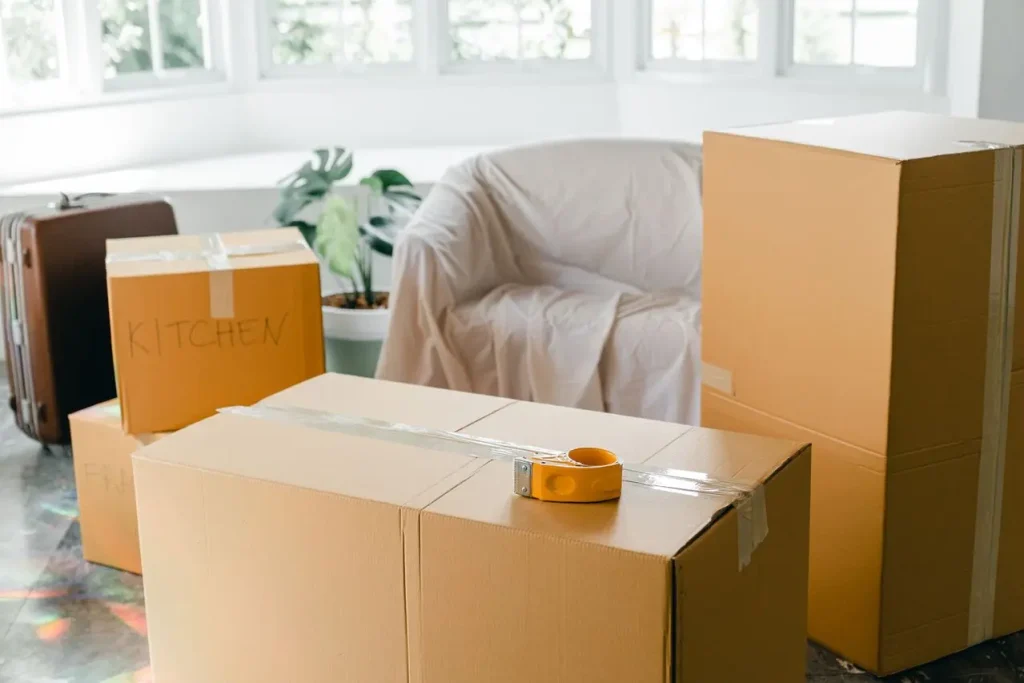
The short version. Both addresses, the rooms, every space that holds things and your date. A written figure follows, and nothing is booked until you say so.
Blackburn sits outside Greater Manchester, and we would rather be straightforward about what that means than pretend the distance does not exist.
It does not mean we treat it as a favour or a stretch. We work here regularly and we know the housing, which is a great deal of mill-era terracing with cellars, staircases that turn, and streets built when nobody owned a car. Those are the same problems we solve every week across the northern side of the conurbation.
What it does mean is that a Blackburn job is planned as a longer run rather than a local one. On a local move a vehicle can come back if it genuinely needs to. On anything travelling any distance it cannot, so everything has to go in one load and the day works backwards from a departure time. That is a different kind of plan and it wants building deliberately rather than assumed.
The practical upshot for you is that decisions matter more. What is coming and what is not needs settling before the day rather than during it, because there is no second trip to absorb an unresolved pile.
Six parts of the town and the ground around it.
Dense terraced streets close to the centre, built for the mills and laid out in long rows. No off-street parking, staircases that turn, and the kerb full by eight in the morning.
More terraced housing on rising ground west of the centre, with newer estates mixed through it. Access varies noticeably from one street to the next.
Inter-war and post-war semis with driveways and gardens on the northern side. Comfortable days, and the garage is where the volume hides.
Larger detached housing on wider plots towards the western edge, with mature gardens and longer approaches. Worth a look before we put a figure on it.
Post-war estate housing on the eastern side, close to the M65. Parking is generally available and the shed is the usual omission.
Terraced and semi-detached streets around the river and the park. Street parking rather than driveways in most of it.
Access here has the same shape as the older mill towns across the border, and most of it comes down to where the town was built rather than what the houses are like inside.
Where from, where to, the rooms, and every space that holds things. Mention the cellar if there is one.
All four matter on any move. On one leaving the area they matter considerably more, because the vehicle is not coming back.
On a longer move this matters more than anywhere. Anything being sold, given away or left behind needs arranging while there is still time, because there is no second trip to absorb it.
Not on the day and not the night before. Bring it to ground level over a weekend, and use the trip to decide what is genuinely coming.
If there is any doubt about whether it all fits in one load, say so now. A larger vehicle allocated in advance costs less than a second journey arranged in a hurry.
Parking, access and who will be there. On a local move a problem at the destination costs an hour. On a long one it can cost the evening.
The single biggest difference between a move within a town and a move out of it is that the vehicle stops being able to come back, and that changes far more than people expect.
On a local job, an unresolved decision is survivable. Anything undecided goes on a second trip, and while that makes for a longer day it does not break anything. On a longer move there is no second trip. Whatever is not on the vehicle when it leaves is either staying behind permanently or becoming a separate journey that costs real money.
The practical consequence is that the planning has to be finished before the morning rather than during it. What is coming, what is being sold, what is going to a relative and what is being left needs deciding in the weeks beforehand. On the day itself there is no room to think about it, because the crew is loading to a plan and the plan has to be right.
The second consequence is that volume has to be estimated honestly rather than optimistically. If a load will not fit, the time to find out is at the quote stage when a larger vehicle can be allocated, not at two in the afternoon with a third of the house still in it. That is why we ask about the cellar, the loft and the garage in more detail on a long move than a short one.
The third is timing. The day works backwards from when the vehicle needs to leave, which means the start is earlier than people expect and the loading is more disciplined. It also means a late completion at the far end is a genuine problem rather than an inconvenience, so it is worth telling us how long the chain is when you book.
None of this makes a long move harder. It makes it a move where the preparation carries more weight, and where the households who decided early have noticeably easier days than the ones who left it.
Everything in the property, including the parts people assume they will sort out themselves.
Five things, and on a move out of the area the first one leads.
A move within Blackburn and a move to Manchester or beyond are planned differently. Distance changes whether a second load is possible at all, and that shapes the day more than the mileage does.
Rooms, cellar, loft, garage and shed. In the older housing here the cellar is the one most often left out and the heaviest when it is found.
Where a vehicle can stand and how far it is to your door, uphill or down. On the terraced streets this is a real part of the day.
The turn at the head of a Blackburn staircase settles this for most beds and a good many wardrobes. Every piece dismantled is time at both ends.
Fridays, month ends and school holidays fill first. Midweek in term time is cheaper and the day runs calmer.

The mill-era terraces are the most common kind of move we do here, and they follow a pattern that is recognisable street to street.
Where the vehicle stands is the first question. These streets were laid out when nobody owned a car and most households now own two, so by eight in the morning the kerb is full. We plan for a carry rather than assume a space, and if there is a spot you know tends to be free, saying so saves genuine time.
The staircase is the second. Almost all of these houses have a straight flight with a turn at the head, and it is the turn that decides everything. A double bed will not come down it assembled and a wardrobe usually will not either. That is normal and it is why dismantling is part of the job rather than an extra, but it means the day carries more work than the size of the house suggests.
The cellar is the third and the one most often forgotten. A good proportion of this housing has one, and what goes into a cellar is heavy. Tools, paint, tiles, a chest freezer, boxes that went down when somebody moved in and were never opened again. All of it comes up a flight before the move proper starts.
The back entry is worth a look before you assume it helps. Some are genuinely useful. Many are too narrow, gated with a key nobody can find, or full of bins on the wrong day.
None of this makes a terraced move difficult. It makes it a job with a known shape, and once we have the street we usually know the shape already.
Blackburn, Darwen and the surrounding towns. Our nearest Greater Manchester page is Bolton, and moves between the two are among the most common we do on this route.
For when two dates on a longer move refuse to line up.
Worth more on a long move than a short one, since there is no second trip.
Which most terraced staircases here require.
The nearest of our Greater Manchester pages, down the A666.
We cover it properly. It is outside Greater Manchester, so a Blackburn job is planned as a longer run rather than a local one, and that is reflected in how the day is arranged rather than treated as an afterthought. Send both addresses and you will get a written figure like anywhere else.
It is one of the more common moves we do on this route. The important difference from a local job is that the vehicle will not come back for a second load, so everything has to fit in one run. That means being decisive about what is coming before the day rather than during it.
It is normal here and it is planned for rather than discovered. Tell us the street when you get in touch and the carry goes into the quote, so the figure does not change on the morning.
No, but tell us it is coming. Cellars are common in the older Blackburn housing and what is kept in them is heavy. It needs to be reachable rather than emptied in advance.
Usually not, and that is fine. The turn at the head of most of these staircases decides it. Dismantling is part of the job rather than an extra, and everything is rebuilt at the new address.
Yes, along with Wilpshire, Great Harwood, Rishton, Feniscowles and the roads towards Accrington.
Yes, and it is worth raising early on a longer move because completion at both ends rarely lines up neatly. Your things go into store and come out when the new place is genuinely yours.
Four to six weeks, and earlier for a longer move or a summer date. For anything travelling out of the area, the earlier we know the better the day can be planned around the departure time.
Send the details and we will come back in writing. For a move out of the area, the earlier we know the better the day can be built around the departure.